

Disclaimer: Brand Quality Products is reader-supported. When you buy through links on our site, we may earn an affiliate commission.
For centuries clothing has been about physical protection, comfort, warmth and personal expression. Today clothing is evolving into a much more intelligent medium – one that can sense, analyze and respond to the human body in real time. This is driven by smart clothing wearable technology, a fast growing sector that’s turning everyday clothing into connected systems that can track biometrics. Learn how it compares to other wearables in our Smartwatches vs Smart Clothing: Comparison Guide.
To understand what is smart clothing you need to differentiate it from traditional wearables like fitness bands and smartwatches. These devices give you valuable insights but are external accessories. Smart clothing integrates micro-electronics, conductive fibers and biometric sensors into the fabric. Smart shirts, socks, sports bras, jackets and compression garments measure vitals, body movement, physical performance and environmental conditions without any need for clip-on modules or extra steps from the wearer.
Instead of remembering to put on an extra device each morning you can just wear your clothing – and get continuous health monitoring for free. This seamless integration is changing how biometric data is captured, interpreted and applied in fitness, wellness, clinical care, rehabilitation and beyond. For more on practical wearables check out Wearable Health Devices: Trends & Reviews.
Market Overview: A Rapidly Expanding Landscape
Smart clothing wearables are in rapid growth mode driven by digital health adoption, athletic performance analytics and textile electronics maturation. North America is the largest market today accounting for approximately 38% of global smart clothing adoption in 2024.
Market Size and Growth
Industry forecasts say the smart textile and garment market will be over $6.6 billion by 2030 with a 24.1% CAGR which is faster than many other wearables categories and reflects consumer and medical readiness for new sensor embedded solutions.
Key Drivers
- Data Driven Fitness and Preventive Health
- Consumers are looking for:
- Cardio load
- Posture
- Stress levels
- Micro-recovery
- Training adaptation
Smart clothing for health monitoring provides more biometric data than wrist devices especially for muscle activation and cardiac readings. Check out Top Fitness Apparel with Integrated Sensors.
- Remote Patient Monitoring and Telehealth
Healthcare is moving from occasional visits to continuous remote monitoring. Smart garments offer:
- Daily passive check-ins
- Medical grade ECG streams
- Rehabilitation tracking
- Early alert systems
Learn more about solutions for home use in our Remote Patient Monitoring Gear for Home Use.
- Industrial & Defense Adoption
In tough environments, we’re seeing employers & military organizations turn to smart clothing for help. They’re trying to:
- Catch on to when their workers are getting too tired
- Get alerts when someone’s in a high-risk situation
- Keep track of the stress their people are under in extreme conditions
- Head off injuries before they happen
If you’re looking for some of the safer side of smart clothes, check out Safety Wearables for Workers in Industry.
Breaking Down Categories
The upper body’s where a lot of the smart clothing action is right now, particularly with stuff like:
- Fitness shirts that help track performance
- Smart bras that look after women’s health
- Those base layers that help you regulate your body temperature
- Athletic jackets that give you data on how you’re doing
These products get to put more sensors in the right spots to do their job well. And ultra-smart fabrics – where they weave sensors & circuits into the actual thread – are exploding onto the scene & show just how far this technology can go, moving towards a future where your clothes do a lot more on their own than just look good or keep you warm. For more on how this works, check out How Do Smart Textiles Get Made? The Real Story Behind E-Textiles.
Smart Clothing With Sensors: The Engine Under the Fabric
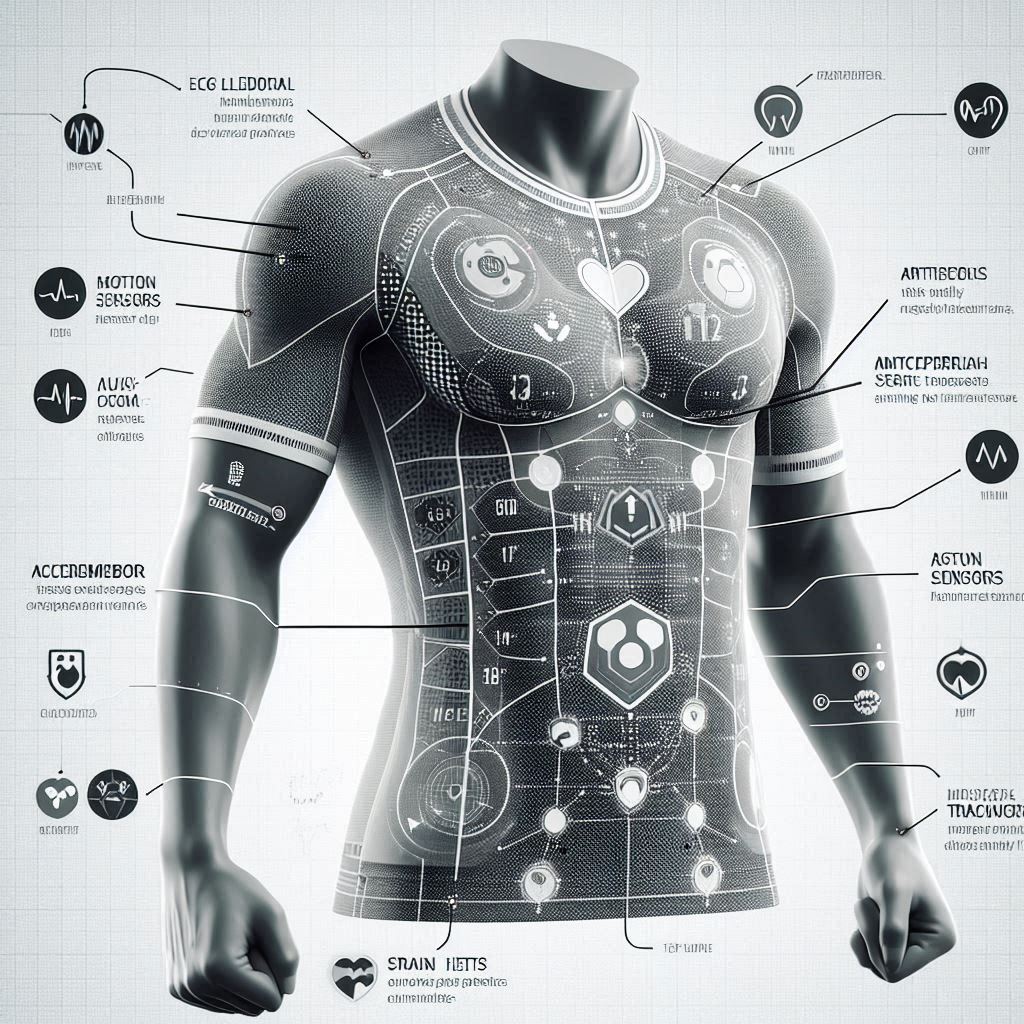
Smart clothing wearable tech stands out because its advanced sensing and processing capabilities are cleverly hidden beneath (or woven into) the fabric. Each piece of clothing essentially becomes a distributed biometric system with all the good stuff tucked away within the fabric.
Key Sensor Types in Smart Wearables
- Fibers with Electrode Tricks (ECG/EMG)
Conductive fibres embedded in the fabric measure:
- Heart rate and cardiac rhythm (ECG) – useful for keeping an eye on cardiac health
- Muscle activation (EMG) – helpful for sports enthusiasts, people recovering from injuries and stress and fatigue levels
They work by sending signals from the body to the sensor without any need for sticky gel patches or clunky medical leads – a game changer for long-term monitoring that won’t irritate your skin.
This is super helpful for monitoring the heart over time, tracking athletic performance, plus stress and fatigue levels.
- Accelerometers and Gyroscopes – Movement Trackers
These little sensors help keep an eye on:
- How you walk
- Joint angles
- Balance
- Exercise form
- Falls
- How well your posture is behaving
They play a key role in physical therapy, helping with posture coaching, detecting falls and helping athletes improve their sports technique.
- Temperature and Moisture Sensors – How’s Your Body Doing?
By placing these right next to your skin you can get a pretty accurate picture of what’s going on with your body – like:
- Skin temperature
- How much you’re sweating
- Hydration levels
- Any localized heat stress
This is super helpful in a load of areas – keeping workers safe in hot and heavy industries, endurance sports and spotting when you might be overheating. More details on care and durability can be found in our Wash & Care Guide for Tech-Embedded Apparel.
- Strain and Pressure Sensors
These sensors are woven into areas like elastic or areas under tension – and they help track stuff like:
- The force of your movements
- Joint position
- Applied force
- Any deviations from the norm
This type of tracking is a big deal in hospitals, for athletes who need to track their performance, gym goers looking to improve their form and sports coaches too.
How the Data System Works
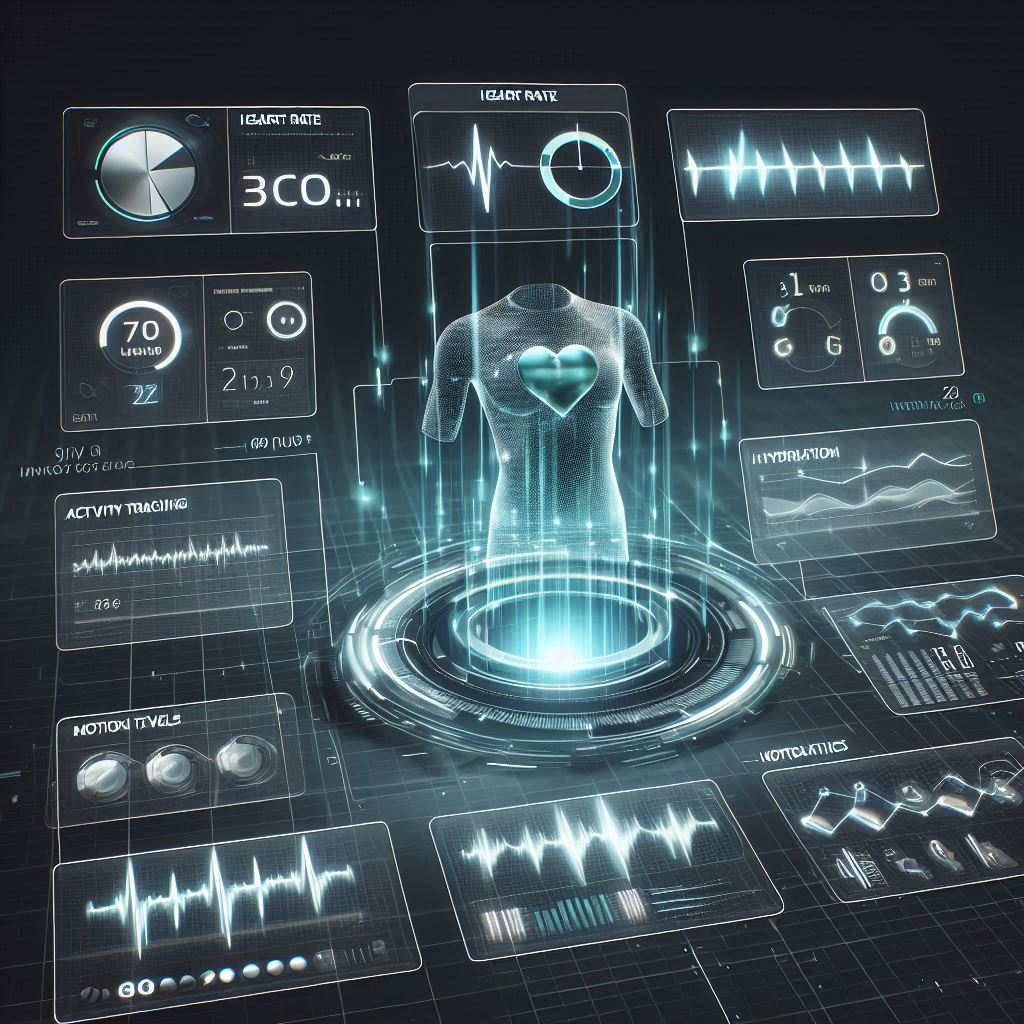
Every product that uses smart clothing with sensors follows a standardized digital path:
Sensors → Microprocessor → Wireless Transmission → Companion App → AI/Cloud Analytics
- Data Capture
Sensors capture raw electrical signals, body movement, or thermal data.
- On-Garment Processing
A microcontroller amplifies, filters, and interprets these signals to reduce noise and improve reliability.
- Wireless Transfer
Bluetooth Low Energy, Wi-Fi, or custom communication protocols send the data to a smartphone or hub device.
- Analytics and Visualization
The applications and dashboards represent the data in:
- Heat maps
- ECG lines
- Muscle contraction curves
- Recovery scores
- Movement analysis charts
This is the point where the insights are transformed into actions. To know about the use of smart fabrics in practical wearables, click on Wearable Health Devices: Trends & Reviews.
Smart Clothing for Health Monitoring: A New Standard of Care
The major change with the smart clothing wearable technology was the ability to monitor health in a continuous and discreet way. This was the case with smart garments that had sensors, which collected the wearer’s data all day as the rest of the body was doing normal activities.
Main Benefits for Users
- Long-Term Trend Analysis
With the daily recording of hundreds or thousands of data points, the users and the doctors will be able to spot:
- Irregular heartbeats
- Changes in breathing
- Uneven movements
- Risk of overtraining
- Slow recovery
- Passive and Comfortable Monitoring
Users do not need:
- Chest straps
- Clip-on monitors
- Watch displays
- Extra charging routines
The whole thing is already included in the clothing they wear daily.
- Real-Time Alerts and Preventive Detection
The systems can detect:
- Irregular heart rhythm
- Unusual tiredness
- Less daily movement
- Increase in body temperature
- Instability in walking gets worse
Real-World Medical and Performance Applications
Chronic Heart Monitoring
ECG-capable clothes are capable of discriminating between atrial fibrillation, tachycardia events, and heart rate variability changes.
Elderly Care
Intelligent clothing is able to identify sudden falls, lack of movement for days, changes in person’s walking, and disturbances in sleep automatically.
Rehabilitation and Physiotherapy
Strain-based sensors assist clinicians and patients with joint mobility tracking, post-surgery recovery, home-based rehab compliance, real-time motion correction, and gamified therapy routines.
Athletic Training
Sensors deliver performance analytics far beyond a wrist device, including muscle load curves, running efficiency, balance, and power generation.
Explore athletic-focused products in our Smart Compression Gear for Athletes.
Conclusion: The Future Is Already Being Worn
The smart clothing technology is a revolutionary one for personal health, wellness, and medical analytics. Rather than monitoring our bodies solely during sports or infrequent medical appointments, smart fabrics monitor us all the time during daily activities. This deeper level of insight means:
- Earlier medical intervention
- More accurate performance coaching
- Safer industrial environments
- Better long term wellness outcomes
As ultra smart textiles get smarter and electronics disappear deeper into threads and fibres, clothing will become a distributed computing platform that requires no effort from the wearer. The future isn’t just wearable – it’s invisible, intelligent and always listening. Read on to see what’s next in Future of Health Tech: Smart Clothing and Beyond.