
Disclaimer: Brand Quality Products is reader-supported. When you buy through links on our site, we may earn an affiliate commission.
Heart rate tracking used to mean one thing: checking your pulse after a workout.
That has changed.
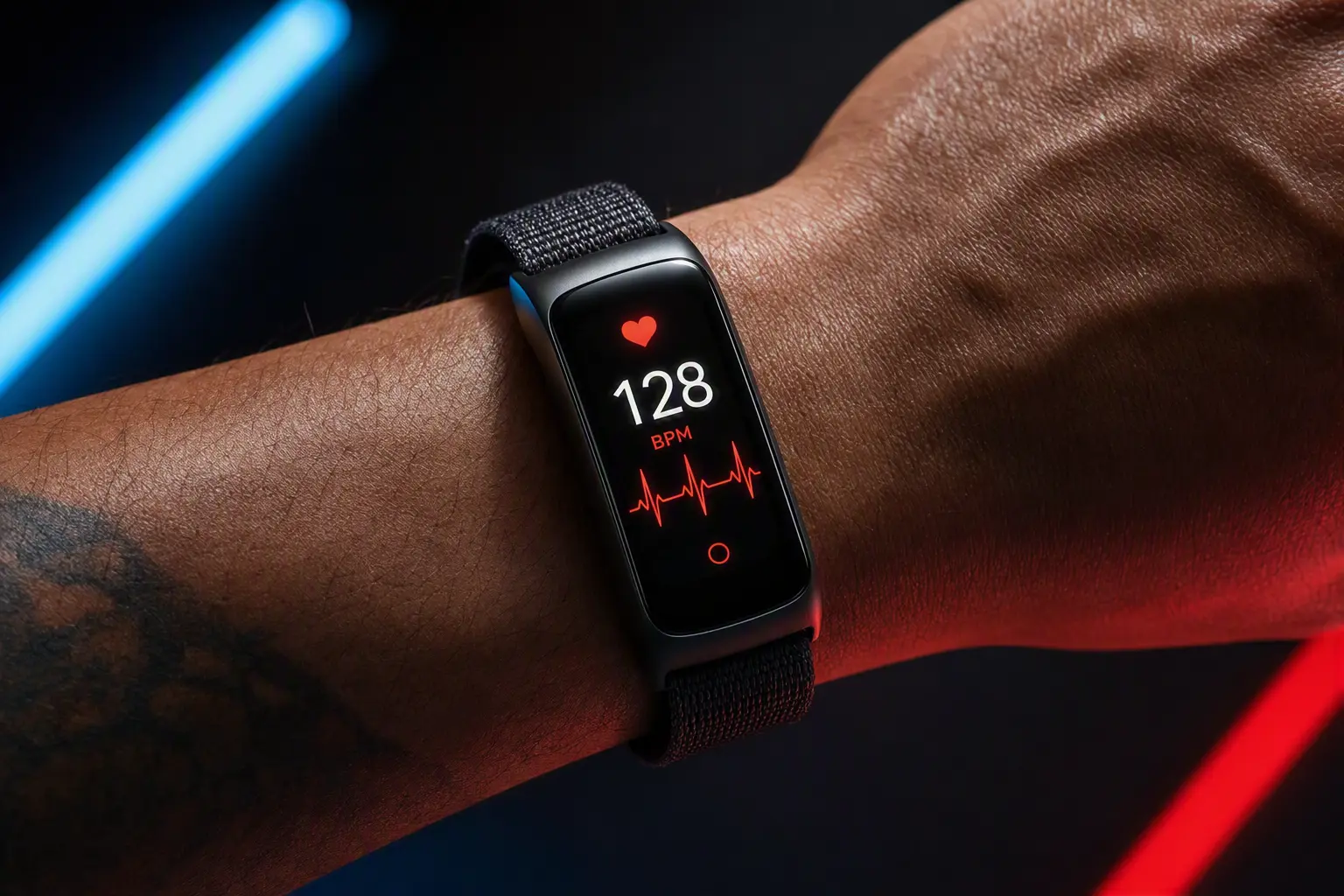
Today, a fitness band with heart rate monitoring can follow your heart rate throughout the day, measure resting heart rate, show workout zones, track heart rate variability (HRV), and connect those numbers with sleep, stress, activity, and recovery. Some devices can even record an ECG when you need a closer look at your heart rhythm.
But there’s a catch.
Not every heart rate tracker is designed for the same person. A screenless recovery band, a basic fitness tracker, and a hybrid smartwatch can all monitor your heart rate, but they approach the job very differently.
So if you’re shopping for a heart rate tracker wristband, don’t just look for the device with the most sensors. Think about how you actually plan to wear it.
Do you want something you can forget you’re wearing? A watch you can glance at during a run? Or a health-focused device with ECG capabilities?
Here’s how to sort through the options without getting buried in specifications.
Which Type of Heart Rate Band Is Right for You?
Before getting into individual devices, it helps to understand the main categories.
| Type | Best For | Display | Typical Battery | Subscription |
| Screenless recovery band | Sleep, recovery, 24/7 tracking | No | Up to 14+ days | Depends on model |
| Fitness tracker | Everyday activity and workouts | Yes | Around 7–21 days | Usually optional |
| Hybrid smartwatch | Health + traditional watch design | Small OLED | Up to 35 days | Usually optional |
| Training strap | Athletes and recovery-focused users | No | Up to 10 days | Usually no |
| Medical-focused smartwatch | ECG and heart rhythm monitoring | Yes | Varies | Usually optional |
The biggest takeaway?
More features don’t automatically mean a better fitness band.
A runner may prefer continuous heart rate data and workout zones. Someone focused on sleep may care more about comfort and battery life. And someone monitoring an existing heart condition may need ECG or medically cleared features rather than simply a higher heart-rate sampling frequency.
Why Choosing a Heart Rate Band Isn’t as Simple as It Sounds
Shopping for a heart rate monitor band sounds straightforward.
Look for heart rate monitoring, check the reviews, buy it.
In practice, there are several things that can affect the experience.
Accuracy can change during exercise
Wrist-based heart rate tracking generally uses optical sensors called PPG sensors. These sensors shine light into the skin and measure changes associated with blood flow.
That works well for everyday tracking.
But rapid movements, loose straps, sweat, skin contact, tattoos, cold temperatures, and certain exercises can affect readings. That’s one reason serious athletes sometimes use chest straps alongside their wrist devices.
You may not actually need a screen
This is an easy detail to overlook.
A screenless band can be surprisingly useful if you don’t want another device constantly asking for your attention. You check the app later rather than looking at your wrist during the day.
WHOOP’s current 5.0 system, for example, is built around a screen-free experience, 24/7 health insights, recovery and strain tracking, and a battery rated for 14+ days.
On the other hand, a screen is handy if you want to check your heart rate while exercising without pulling out your phone.
Subscription costs can change the equation
The upfront price isn’t always the full price.
Some fitness trackers allow access to heart rate information without requiring a monthly payment. Other trackers require you to pay for continuous or premium access to their information and services.
For example, Hume Band 2.0 provides panic heart rate readings and fitness statistics without charging for a monthly subscription; however, premium services can be accessed for a fee.
However, WHOOP follows a totally different strategy of charging customers a membership fee for their wearables.
Types of Heart Rate Tracking Wristbands
There isn’t one universal design for a fitness band heart rate monitor.
Here are the main types you’ll come across.
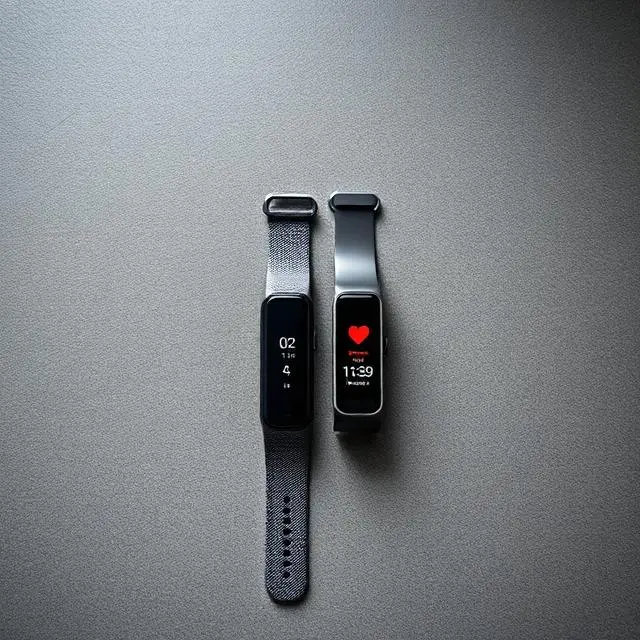
1. Screenless Wristbands
These are designed to disappear into your routine.
You wear the band during work, workouts, sleep, and recovery. The device collects the data, and you review it later through an app.
The appeal is obvious if you don’t need notifications, apps, music controls, or a watch face.
Hume Band 2.0
The Hume Band 2.0 is one example of this approach. It uses a screenless design and focuses on continuous heart rate, overnight HRV, resting heart rate, sleep, activity, recovery, and other wellness signals. Hume lists up to 14 days of battery life and no subscription for core metrics.
That’s a strong combination for someone who wants a wearable mainly for health and recovery rather than smartwatch features.
WHOOP 5.0
WHOOP is another well-known screenless option.
Its current 5.0 platform focuses heavily on sleep, strain, recovery, heart rate zones, and coaching. WHOOP lists 14+ days of battery life, while higher-tier offerings add features such as health alerts and ECG readings through WHOOP MG.
The trade-off is the membership model.
If you’re happy paying for an ecosystem that turns your raw data into recommendations, it can make sense. If you want to buy a band once and use the basic data without a recurring membership, other options may be more appealing.
2. Pebble-Style Fitness Bands
When individuals hear the term “fitness band,” they generally envision the same image. A small tracking device is worn on the wrist. The small display shows the number of steps, the heart rate, various types of exercise, notifications, sleeping stages, etc.
These are usually a good middle ground.
You get more immediate information than a screenless band, but the device remains smaller and lighter than a full-size smartwatch.
Xiaomi Smart Band 10
The Xiaomi Smart Band 10 is a good example of this category. It supports heart rate monitoring, blood oxygen monitoring, sleep and stress tracking, and more than 150 sports modes. Xiaomi lists up to 21 days of typical battery life, although battery life drops with heavier use and always-on display settings.
For someone who wants everyday tracking without charging every night, that’s appealing.
The larger issue for US shoppers is availability and ecosystem support, which can vary by market.
Fitbit Inspire 3
The Fitbit Inspire 3 takes a similar lightweight approach.
It provides continuous wellness tracking, heart rate information, Active Zone Minutes, sleep-related metrics, and up to 10 days of battery life according to Fitbit’s specifications.
It is a good choice for those who are not looking for anything complicated such as a smartwatch with tons of features.
3. Hybrid Smartwatches
This category is interesting because the device looks more like a traditional watch.
You get physical watch hands or a classic watch design, but underneath there are sensors and digital health features.
The best-known example in this group is the Withings ScanWatch 2.
Withings ScanWatch 2
The ScanWatch 2 combines a traditional-looking watch design with a grayscale OLED display, multi-wavelength PPG sensors, heart health monitoring, sleep tracking, and ECG functionality. Withings currently lists battery life of up to 35 days.
For US users, there’s an important distinction here.
The Withings ECG App has FDA clearance in the United States for ECG functionality, and the company says the feature can help detect atrial fibrillation through ECG readings.
That doesn’t turn the watch into a replacement for your doctor or a clinical ECG machine.
But it does make this type of device more interesting for people who specifically want heart-rhythm features in addition to everyday fitness tracking.
4. Training and Recovery Straps
Then there are bands designed more specifically around training.
They may not look like conventional smartwatches at all. Instead, the goal is to capture continuous physiological data while staying lightweight enough to wear during workouts and sleep.
Amazfit Helio Strap
The Amazfit Helio Strap is built around continuous health and training data.
Amazfit says it captures heart rate continuously, with heart rate data available through the Zepp app. It also tracks HRV, sleep, stress, blood oxygen and other recovery-related information. Battery life is rated at up to 10 days.
One particularly useful feature is Bluetooth heart rate broadcasting, which allows the strap to send real-time heart rate information to compatible fitness equipment, cycling computers, smartwatches, and apps.
And unlike membership-focused products, Amazfit says heart rate monitoring doesn’t require a subscription.
Top Heart Rate Wristbands & Watches to Consider
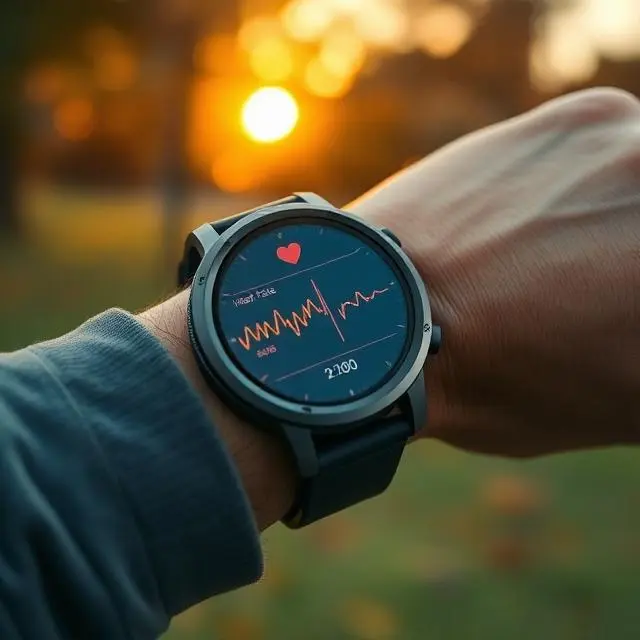
If you want to narrow down the choices, these are the models I’d put on the shortlist based on different use cases.
Best Screenless Recovery Tracker: Hume Band 2.0
The Hume Band 2.0 makes the most sense if you want to wear a tracker 24/7 without a screen getting in the way.
It focuses on continuous heart rate, resting heart rate, HRV, sleep, strain and recovery. Hume also provides blood-pressure trend insights, but importantly, the company describes those as trends rather than a replacement for a blood-pressure cuff.
Best for: Sleep, recovery and everyday health tracking.
Why consider it: 14-day battery, screenless design and no subscription for core metrics.
Watch out for: If you want to see information directly on your wrist, you’ll need something else.
Best Recovery Ecosystem: WHOOP 5.0
WHOOP is particularly attractive to people who care about how training affects recovery.
Instead of simply showing your current heart rate, its platform is designed to interpret heart rate, HRV, sleep and workout strain together.
WHOOP currently lists 14+ days of battery life for its 5.0 device and offers different membership levels depending on how much health and coaching functionality you want.
Best for: Athletes, serious exercisers and recovery-focused users.
Why consider it: Strong emphasis on recovery and training decisions.
Watch out for: Membership cost.
Best Hybrid Smart Heart Rate Watch: Withings ScanWatch 2
If you don’t want to wear something that screams “fitness tracker,” the ScanWatch 2 is worth a look.
It looks like a conventional watch while still offering heart rate monitoring, sleep tracking, ECG and other health features.
Its battery life is also a major advantage. Withings lists up to 35 days under specified conditions.
If you prefer not to wear a fitness band that makes it obvious what it does, check out the Scan Watch 2. It appears like a normal wristwatch and provides heart price tracking, rest monitoring, ECG and other health features. It also has a long battery life.
Withings advertises approximately 35 days of use based on specifications.
Why get it: fashionable appearance, batteries that last a long time, FDA approved ECG in the US.
Best Value Fitness Band: Xiaomi Smart Band 10
For people who mainly want everyday activity tracking, Xiaomi’s Smart Band 10 offers a lot in a small package.
It supports heart rate monitoring, sleep, stress, blood oxygen and more than 150 sports modes. Battery life can reach up to 21 days under the company’s typical-use conditions.
Best for: Everyday fitness and basic heart rate tracking.
Why consider it: Small design, lots of features and long battery life.
Watch out for: Feature availability can vary by region and phone ecosystem.
Best Simple Fitbit Option: Fitbit Inspire 3
If you already use Fitbit or Google’s health ecosystem, the Inspire 3 is worth considering.
It’s compact, tracks heart rate throughout the day, monitors activity and sleep, and provides Active Zone Minutes to help you understand how hard you’re exercising. Fitbit lists up to 10 days of battery life.
Best for: Beginners and casual fitness users.
Why consider it: Easy-to-understand health and activity tracking.
Watch out for: Some advanced insights are tied to Fitbit Premium.
Best Training Strap: Amazfit Helio Strap
The Helio Strap sits somewhere between a fitness band and a dedicated recovery wearable.
It constantly gathers data on the heart rate and transmits the data to compatible devices. Moreover, it offers recovery information via the Zepp application.
Best for: People who train regularly and want continuous heart rate data.
Why consider it: Continuous tracking, up to 10-day battery and no subscription for heart rate monitoring.
Watch out for: No conventional smartwatch display.
What Should Heart Patients Look For?
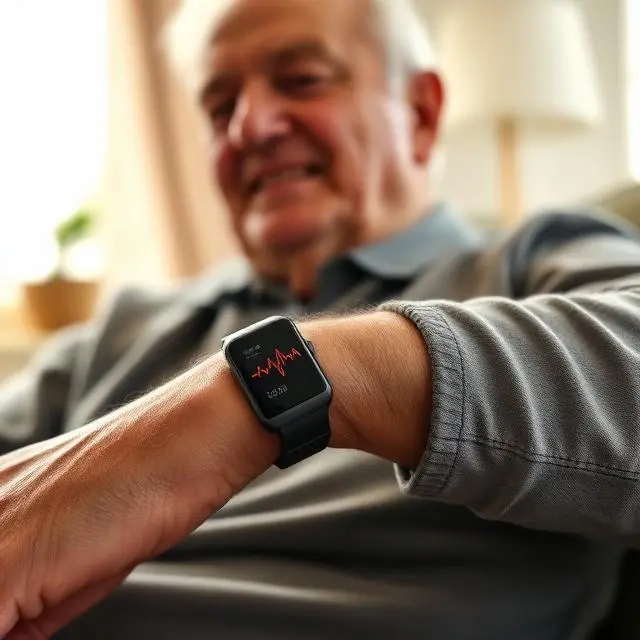
This is where shopping for a best heart rate monitor watch for heart patients becomes different from shopping for a normal fitness tracker.
If you’re monitoring an existing heart condition, don’t simply choose the device with the highest number of sensors.
Look for the specific health feature your healthcare provider has recommended.
ECG can matter more than ordinary heart rate tracking
A standard optical heart rate sensor estimates your pulse using PPG.
An ECG records electrical activity from the heart.
Those are different measurements.
Some consumer wearables can record an ECG and look for patterns associated with atrial fibrillation. The Withings ScanWatch 2, for example, includes ECG functionality that has FDA clearance in the US.
WHOOP’s higher-tier MG offering also includes ECG readings and on-demand AFib detection.
But don’t confuse these features with a diagnosis.
The FDA notes that consumer wearables can provide notifications about cardiovascular abnormalities, but these devices are not intended to provide diagnoses on their own.
If you’re experiencing chest pain, fainting, severe shortness of breath, unusual palpitations, or another concerning symptom, a wearable isn’t the place to make a medical decision.
Contact a healthcare professional.
Sensor Placement Matters More Than People Think
One can use an expensive heart rate monitor and yet get bad results when using it inappropriately.
When using a wrist monitor, one must ensure that there is continuous contact between the band and the skin without being extremely tight on your wrist.
While working out, one is likely to experience movement of the band because of the movements of his wrist.
For high-intensity exercise, a chest strap can still be a useful alternative because it measures electrical signals closer to the heart.
So if your main goal is serious training rather than general wellness, consider whether you actually need a wristband at all.
How to Choose the Right Heart Rate Monitor
Here’s the simple buying checklist I’d use.
1. Start with your actual goal
Ask yourself:
Why do I want heart rate tracking?
If the answer is “I want to see how active I am,” you don’t need an expensive recovery wearable.
If the answer is “I want to understand training load and recovery,” something like WHOOP, Hume or Helio makes more sense.
If you specifically need ECG functionality, your shortlist changes again.
2. Check the sensor technology
Most wrist-based trackers use PPG.
Look for devices with modern optical sensor systems and good skin contact.
Don’t get too caught up in claims like “more LEDs = perfect accuracy.”
Real-world accuracy depends on sensor design, placement, software, movement and the individual wearing the device.
3. Think about battery life
Battery life sounds boring until you forget to charge your tracker.
A screenless band can often last longer because it doesn’t have to power a large display.
Xiaomi lists up to 21 days for the Smart Band 10 under its specified typical-use conditions.
Amazfit lists up to 10 days for the Helio Strap.
WHOOP lists 14+ days for its 5.0.
And the ScanWatch 2 can reach up to 35 days under specified usage conditions.
Those differences matter if you’re tracking sleep.
A device sitting on the charger isn’t tracking anything.
4. Decide whether you want a screen
A screen is useful for:
- Checking heart rate during workouts
- Seeing time and notifications
- Viewing steps
- Checking workout information
- Quickly reviewing progress
A screenless band is better if you want:
- Fewer distractions
- Better sleep comfort
- A lightweight design
- Data-first tracking
- Longer battery life
There’s no wrong choice.
It’s about how you behave when you wear it.
5. Don’t ignore subscription costs
This is one of the biggest differences between modern wearables.
A cheaper device with a monthly membership can eventually cost more than a more expensive device that doesn’t require one.
Hume says its core Band 2.0 metrics don’t require a subscription.
Amazfit says continuous heart rate data from the Helio Strap is available without subscription fees.
WHOOP, meanwhile, packages its current wearable experience through membership plans.
Look at the two-year cost, not just today’s price.
Real-Life Situations Where a Heart Rate Band Helps
During workouts
Heart rate zones can give you a better idea of how hard you’re working than simply looking at your speed or workout duration.
For example, if you’re doing an easy cardio session but your heart rate is unusually high compared with your normal baseline, that may be a reason to ease off and consider factors such as heat, poor sleep or fatigue.
The number is context, not a verdict.
During sleep
This is where a screenless heart rate tracker wristband can be particularly useful.
You don’t need a screen at 2 a.m.
You need something comfortable enough to keep wearing.
Over time, trends in resting heart rate and HRV can help you understand how your body responds to sleep, training and lifestyle changes.
During recovery
Let’s say you had a hard workout yesterday.
You wake up feeling tired, and your normal resting heart rate or HRV trend looks different.
A recovery-focused wearable can help you recognize that pattern instead of automatically pushing through another hard session.
That’s one reason devices like WHOOP and Hume focus so heavily on recovery rather than simply counting steps.
Pros and Cons of Heart Rate Fitness Bands
Pros
- Continuous heart rate tracking
- Useful workout-zone information
- Resting heart rate trends
- HRV tracking on many models
- Sleep and recovery insights
- Lightweight options are available
- Some models offer ECG
- Long battery life on many bands
- Can help you understand changes over time
Cons
- Wrist readings aren’t perfect
- Accuracy can drop during certain workouts
- Some advanced features require subscriptions
- Medical features vary by country
- Consumer trackers aren’t replacements for medical equipment
- Too much data can become confusing
- Some users may find 24/7 tracking distracting
And there’s another downside people rarely mention:
You can become obsessed with the numbers.
If your wearable says your recovery score is low but you feel great, don’t automatically cancel your day.
Use the data as one input, not as the final authority on how you feel.
Who Should Buy a Fitness Band with Heart Rate Monitoring?
A heart rate band is a particularly good fit for:
Beginners
Your body’s reaction to running, walking and other movements can be known without having to purchase an expensive smartwatch.
Regular gym-goers
Heart rate zones and workout trends can help you understand intensity over time.
Runners and cyclists
A continuous heart rate tracker can complement pace, distance and workout data.
People focused on sleep
Screenless bands are especially attractive because they are designed for continuous wear.
Recovery-focused athletes
If you’re training several days a week, HRV, resting heart rate, sleep and recovery trends can provide useful context.
People who want heart-rhythm features
If ECG or AFib detection is specifically important to you, focus on devices with the appropriate regulatory clearance rather than choosing based on generic heart rate tracking alone.
Simple Buying Guide
If you want to make the decision quickly, use this:
Choose Hume Band 2.0 if:
You want a screenless health and recovery tracker with long battery life and no subscription required for core metrics.
Choose WHOOP 5.0 if:
Your priority is training, recovery, sleep and coaching, and you’re comfortable with a membership model.
Choose Withings ScanWatch 2 if:
You need an old-fashioned looking watch with heart-healthy technologies and ECG capabilities.
Choose Xiaomi Smart Band 10 if:
You need a slim and small fitness band that has a screen and many sport modes.
Choose Fitbit Inspire 3 if:
You want a straightforward tracker and already like the Fitbit ecosystem.
Choose Amazfit Helio Strap if:
You want continuous heart rate and recovery tracking without a subscription, particularly for training.
Final Thoughts
The best fitness band with heart rate monitoring isn’t necessarily the most expensive one.
It’s the one you’ll actually wear.
If you want simple everyday tracking, a lightweight fitness band is probably enough. If you’re serious about recovery, a screenless wearable may make more sense. And if heart rhythm monitoring is the priority, look for a device with ECG capabilities and the appropriate regulatory clearance.
The current options cover a surprisingly wide range.
From the screenless Hume Band 2.0 and WHOOP 5.0 to the traditional-looking Withings ScanWatch 2, the goal isn’t simply to collect more numbers. It’s to collect the right numbers for your needs.
Before buying, ask yourself three questions:
Will I wear it every day?
Do I need a screen?
Do I need medical or ECG-related features, or just everyday fitness tracking?
Answer those first.
The rest of the buying decision becomes much easier.